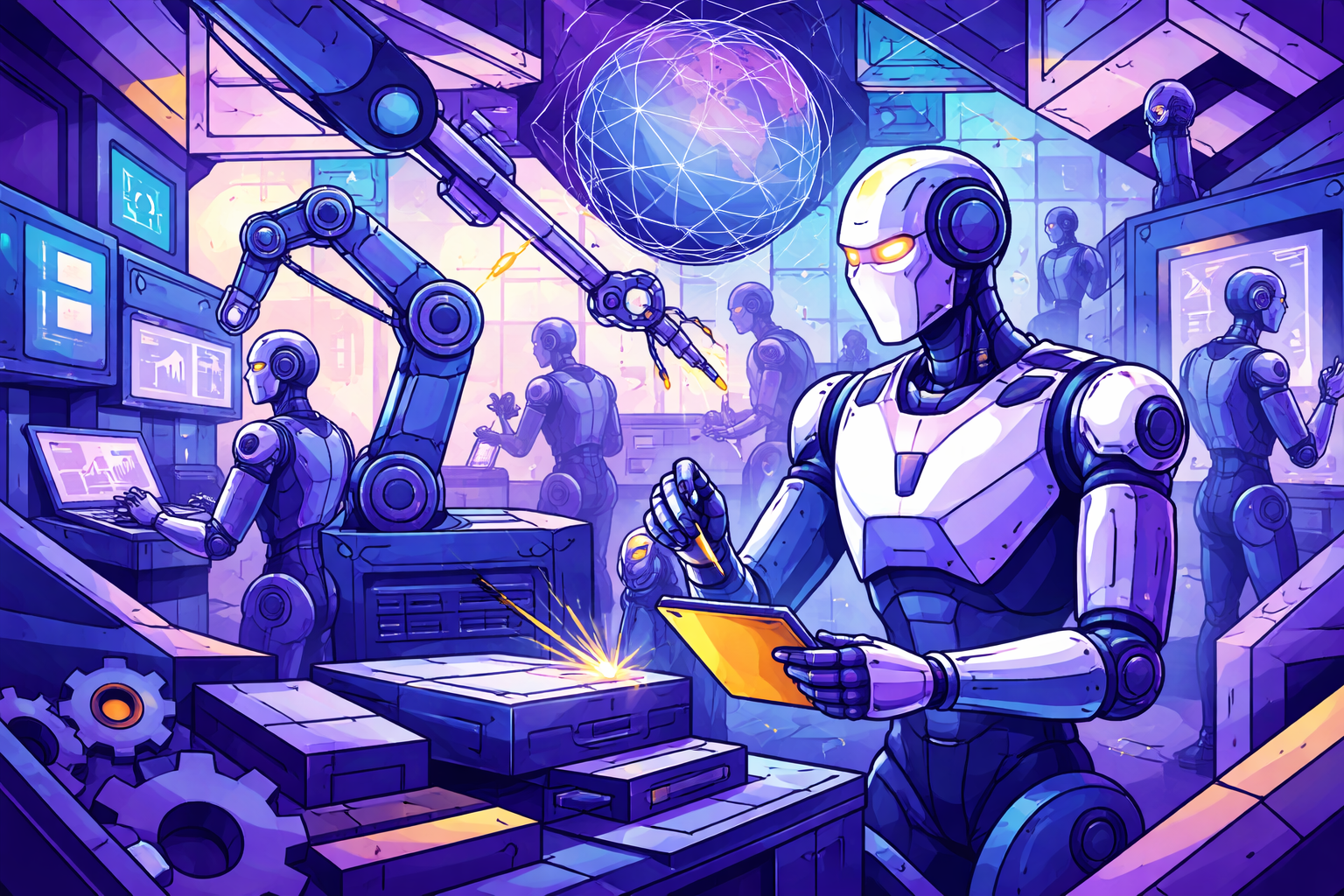

For years, we’ve associated artificial intelligence with text, images, and software. Now the focus is shifting: the real challenge is bringing AI into the physical world.
It’s no longer just about software
In the digital realm, AI can learn from vast amounts of text and online data. In the physical world, it’s different: every movement must be taught, recorded, corrected, and repeated. That’s why today’s bottleneck isn’t just the model, but the entire infrastructure that makes it operational: physical data, simulation, sensors, motor control, and training environments.
China is building out its training ecosystem
The most interesting aspect is not the individual robot, but the fact that China is creating a network of training and data-collection centers for humanoid robots. According to the Financial Times, these laboratories serve to build multimodal databases and training infrastructure to put a “brain” into machines. Reuters had already reported that Beijing has driven the sector forward with funding, incentives, and sites dedicated to task-based data collection, with the goal of strengthening manufacturing, productivity, and addressing labor shortages.
Why This Topic Really Matters
Robotics is no longer a niche laboratory field. The International Federation of Robotics reports that the global value of industrial robot installations has reached an all-time high of $16.7 billion, while annual installations hit 542,000 units in 2024—more than double the figure from ten years earlier. In other words: the industrial foundation already exists. The next step is to make it more autonomous, flexible, and intelligent.
The Real Battleground: Simulation and the Real World
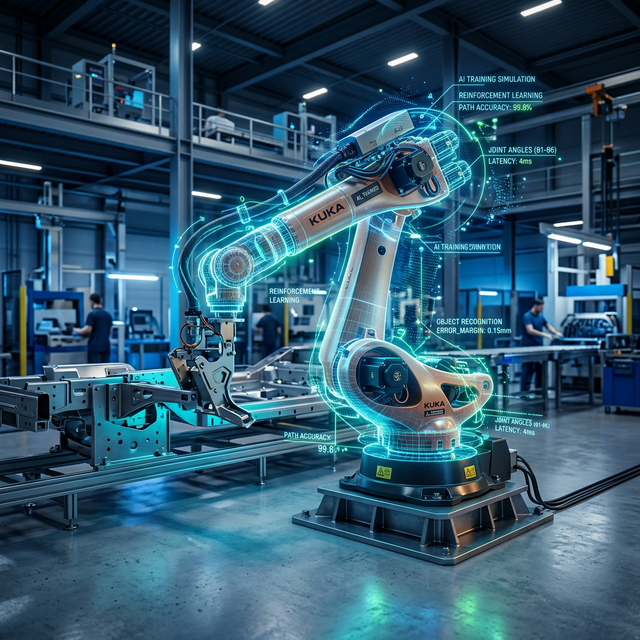
One of the strongest signals comes from the partnership announced by ABB and NVIDIA: the goal is to bridge the gap between simulation and the real factory by using more realistic virtual environments to train industrial robots before deployment. This step is crucial because it makes the transition from theoretical AI to practical automation faster and less expensive.
The three key drivers of this trend
1. Productivity
Companies seek efficiency, precision, and operational continuity in factories, logistics, and warehouses. Robotics addresses an economic need, not just a technological one.
2. Demographics and Labor
Labor shortages, an aging population, and difficulties in recruiting technical talent are accelerating interest in advanced automation.
3. Industrial Policy
China is treating embodied AI as a national strategic priority, providing funding, training centers, and support for the ecosystem.
Risks That Should Not Be Ignored
The narrative is compelling, but not straightforward.
The first risk is technical: data collected on one machine may not transfer well to another with different hardware. The second is economic: part of the current demand is still driven by governments, research centers, and pilot projects. The third is financial: when a sector receives too much capital too soon, the risk of overcapacity and squeezed margins increases.
The Real Question for Investors
The question isn’t just whether robots will work. The right question is: what infrastructure will become indispensable for them to truly function at scale?
That’s where value often lies: in the bottlenecks, not in the most spectacular component. A subsequent article attempts to answer this question by listing the chip and memory manufacturers that make both local AI and robotics possible.
Conclusion
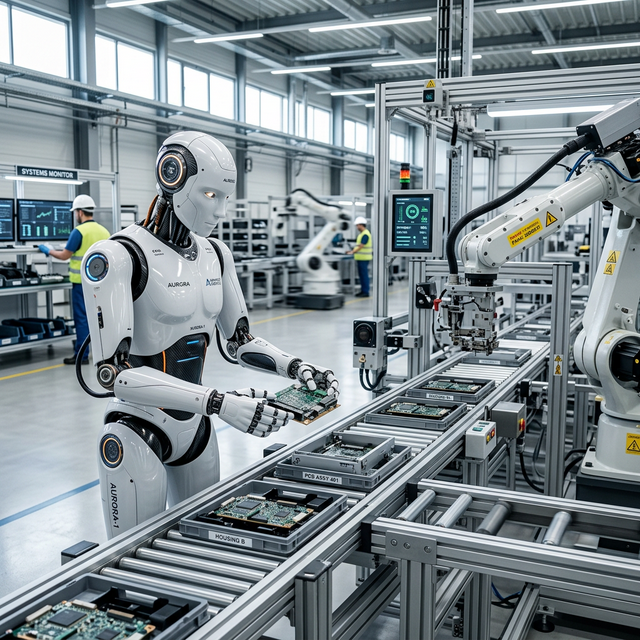
The silent war of the robots has already begun. It’s not just being fought in laboratories, but in factories, warehouses, data centers, simulation environments, and the industrial supply chain. AI is no longer just trying to understand the world—it’s starting to want to change it.
In Summary
- The next phase of AI is physical, not just digital.
- China is investing in training data and infrastructure for humanoid robots.
- The real value may lie in the system’s bottlenecks.
- The issue is real, but it remains subject to technical and industrial risks.
Bibliography
- Ryan McMorrow, “Inside the AI labs training China’s humanoid robots,” Financial Times, March 12, 2026.
- Reuters, “ABB teams up with NVIDIA to improve factory robot training,” March 9, 2026.
- Reuters, “China’s AI-powered humanoid robots aim to transform manufacturing,” May 13, 2025.
- International Federation of Robotics, “Top 5 Global Robotics Trends 2026,” press release / industry analysis, 2026.
- International Federation of Robotics, World Robotics materials / global trends in industrial robotics, used to support data on installations and market value.